
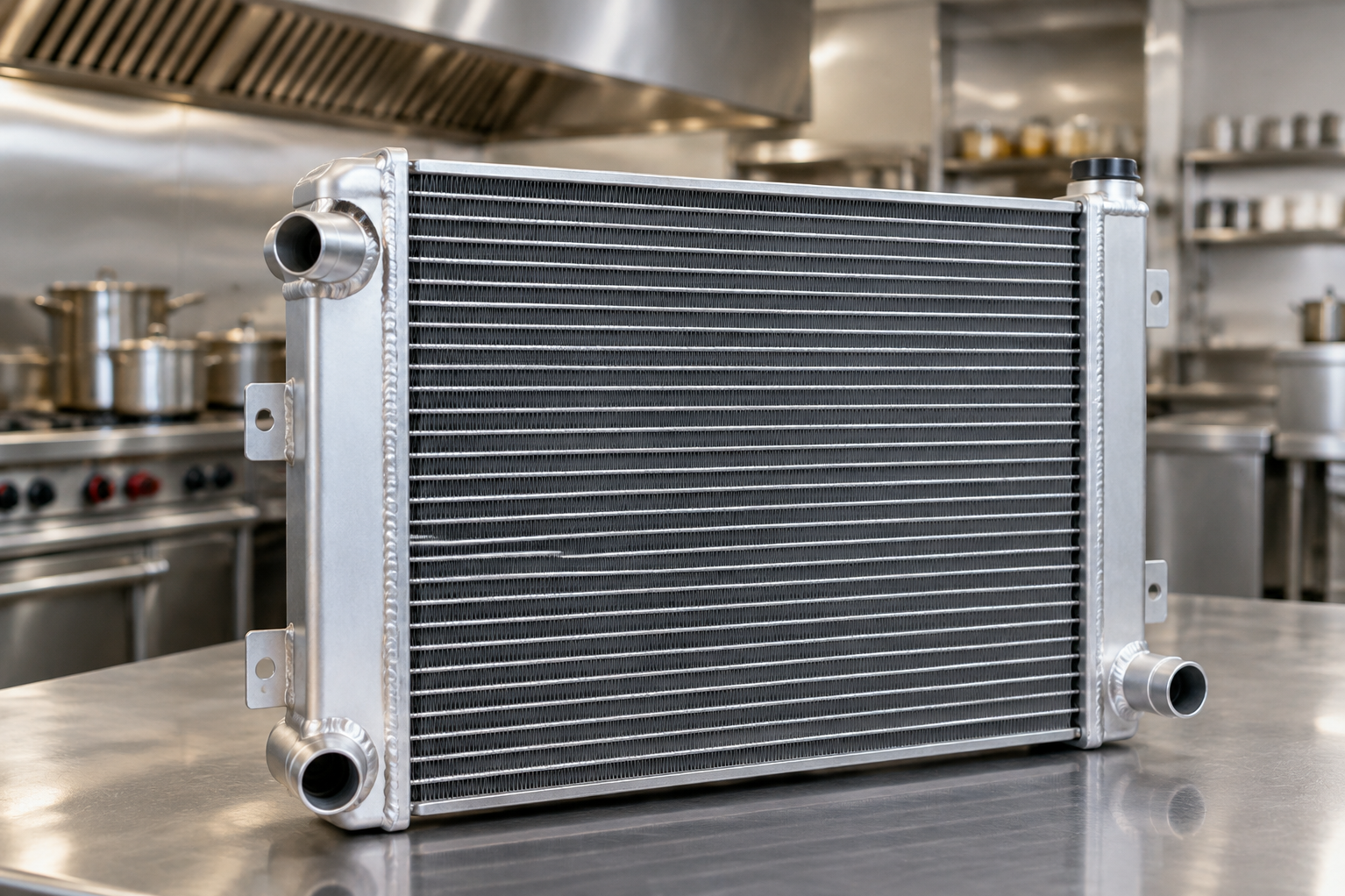
Commercial kitchens depend on multiple systems working together under demanding conditions. Cooking appliances, refrigeration units, ventilation systems and supporting components may operate for long hours every day. A Kitchen Equipment Radiator used within a compatible system can play an important role in heat management and reliable equipment operation.
For hotels, restaurants, institutional kitchens and catering businesses in Delhi, understanding the function of individual components is useful because a relatively small part can sometimes affect the performance of a much larger piece of equipment.
What Does a Radiator Do?
A radiator is essentially a heat-exchange component. Depending on the equipment design, it helps transfer unwanted heat away from a circulating fluid or another part of the system.
The exact configuration varies considerably between equipment types. This is why a radiator should not be selected simply by matching its external dimensions.
Important considerations can include:
- Equipment make and model
- Radiator dimensions
- Connection locations
- Fluid compatibility
- Operating temperature
- Pressure requirements
- Cooling capacity
- Mounting arrangement
- Material construction
Using a component that physically fits but does not match the technical requirements can result in poor performance.
Signs That Heat Management Needs Attention
Commercial equipment should be investigated when it begins operating at temperatures outside its normal range.
Possible warning signs include repeated overheating, unusual temperature fluctuations, coolant leakage where applicable, reduced operating efficiency or unexpected shutdowns.
These symptoms do not automatically mean that the radiator itself has failed. Blocked passages, damaged hoses, pumps, fans, sensors and other components can create similar problems.
A systematic inspection is therefore more useful than immediately replacing the most obvious part.
Cleaning Is Different From Replacement
Accumulated dirt, grease and debris can interfere with heat transfer. In commercial kitchens, airborne grease can make this particularly important.
Some performance problems may therefore be associated with contamination rather than permanent component damage.
Maintenance teams should determine whether the radiator can be safely cleaned according to the equipment manufacturer's requirements. Bent fins, corrosion, leakage or internal damage may require a different solution.
Cleaning methods must also suit the radiator material because aggressive treatment can damage delicate surfaces.
Why Equipment Identification Matters
One of the most common spare-part problems is ordering according to appearance.
Two radiators may look similar while having different technical specifications. Before purchasing a replacement, record the equipment identification information available on the machine.
Useful details include the manufacturer, model, serial number and existing component reference. Clear photographs and accurate measurements can also help with identification.
For hospitality facilities across Delhi and the wider Delhi NCR operating environment, keeping these details in an equipment register can make future maintenance significantly easier.
Preventive Maintenance Reduces Unexpected Problems
Heat-management components should be included in routine equipment inspections rather than checked only after a breakdown.
Maintenance teams can monitor cleanliness, connections, signs of leakage, corrosion and physical damage. Operating temperatures can also be compared with the equipment's recommended range where appropriate.
PCNS ENGINEERS Pvt. Ltd. works within commercial kitchen equipment sales, spares, installation, repair and maintenance, making accurate equipment identification particularly relevant when businesses are evaluating replacement components.
A Kitchen Equipment Radiator should ultimately be treated as an engineered component rather than a generic accessory. Correct identification, suitable maintenance and compatibility with the original equipment can help commercial kitchens maintain more dependable day-to-day operations.
Keywords


